The following posts summarize and expand on my research for a public audience:
The US government employs more than two million civilian personnel through its Cabinet departments and executive agencies. In new research, Daniel A. N. Goldstein looks at what Donald Trump’s return to the White House this January may mean for the US federal bureaucracy and its effectiveness. He writes that with Trump’s political appointees set to advance policies counter to institutionalized goals and norms, federal agencies may see a temporary or even more permanent departure of mission-driven employees, potentially undermining agencies’ ability to fulfill their mission… [Continue reading]
Reversals of Capacity: Norms, Culture, and Institutional Disruption [The Journal of Politics Blog]
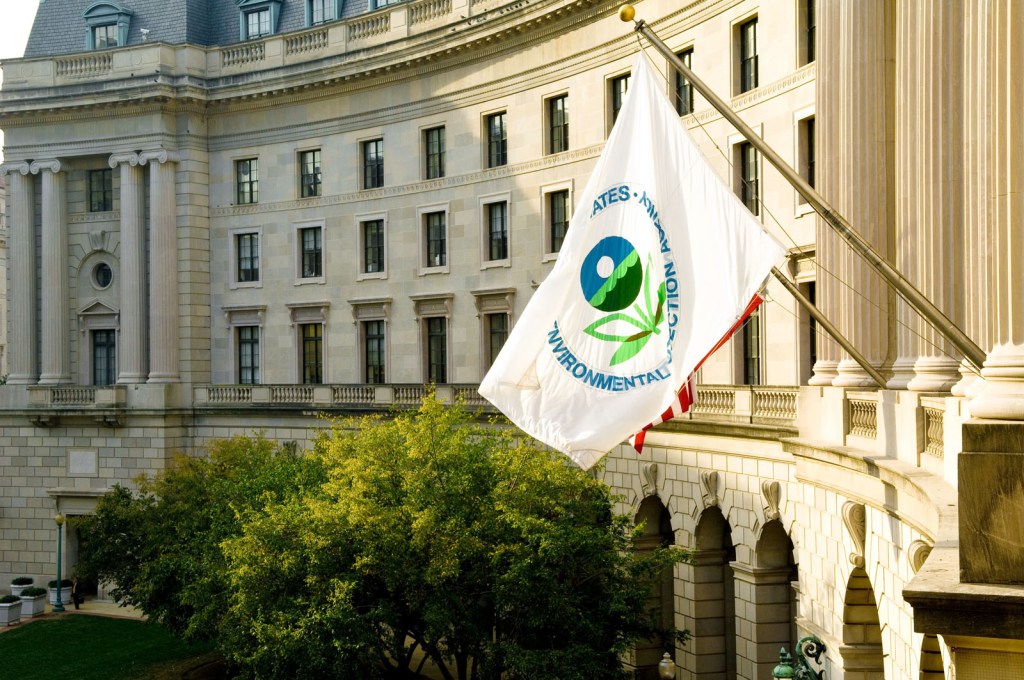
The public sector must hold the capacity to effectively address pressing concerns such as climate change and environmental degradation. In the United States, this role is primarily fulfilled by the federal Environmental Protection Agency (EPA), which defines its mission as “protect[ing] human health and the environment.” One of its most vital functions is to enforce environmental regulations through civil litigation and to refer particularly harmful cases to the Department of Justice for criminal prosecution. Yet the EPA’s record of enforcement is near record lows. In 2022, the EPA closed the fewest number of civil cases in the last twenty years and referred the second lowest number of polluters to the Department of Justice. This is despite the fact that the EPA is under the leadership of Administrator Michael Regan, an appointee of President Biden. Biden is fairly supportive of environmental policies and oversaw the passage of arguably the largest investment in combating climate change in U.S. history via the Inflation Reduction Act. Given that the current administration appears to support enforcement, what explains the EPA’s inability to achieve one of its core goals?… [Continue reading]
Endogenous State Capacity [Broadstreet]
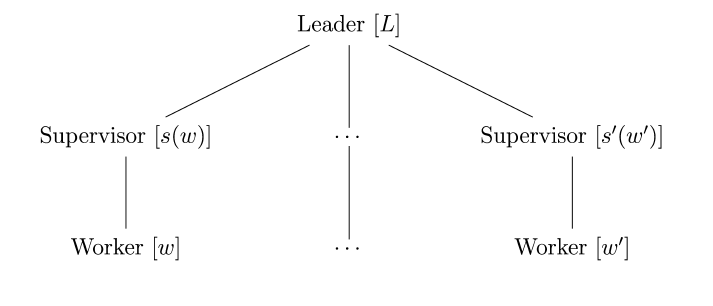
Here we go again… State capacity is generally defined as the ability of the state to fulfill its intended policy aims. Yet, how to precisely conceptualize and measure state capacity has been one of the most debated topics in historical political economy. To illustrate the challenges with this definition, let’s consider a state that has invested in the size and training of its public sector workforce, which should enhance its state capacity. However, the goals of the state’s leaders are at odds with the long-term, institutionalized objectives that public sector employees hold dear. This creates a conflict between leadership and bureaucrats over state output. Should this state be characterized as having a high capacity to achieve its intended ends? And which are the appropriate policy goals to examine in order to evaluate this state’s capacity?… [Continue reading]
Recent events, such as the US capitol insurrection have raised concerns about the erosion of democracy and democratic norms in the United States. In new survey research, Daniel Goldstein takes a close look at Americans’ attitudes to those who would break democratic norms, such as a commitment to fair elections. He finds that many Americans are happy to financially punish those they see as breaking democratic norms, suggesting that citizens may be more likely to hold one another to account and support democratic institutions than is currently thought by many… [Continue reading]
In recent months, the majority of the US population has been subject to stay at home and social distancing orders to help prevent the spread of COVID-19. In new research which analyses cellphone data, Daniel A. N. Goldstein and Johannes Wiedemann find that people’s sense of trust in government and others is related to their compliance with going along with preventative measures like stay at home orders. They write that this link is fueled by partisanship and social capital: people are more likely to trust preventative policies if they have high levels of social capital or if the measures are implemented by officials who are from the party they support… [Continue reading]
 Daniel A. N. Goldstein